Single Column Emergency Shower with Optional Eyewash Bowls in South Africa
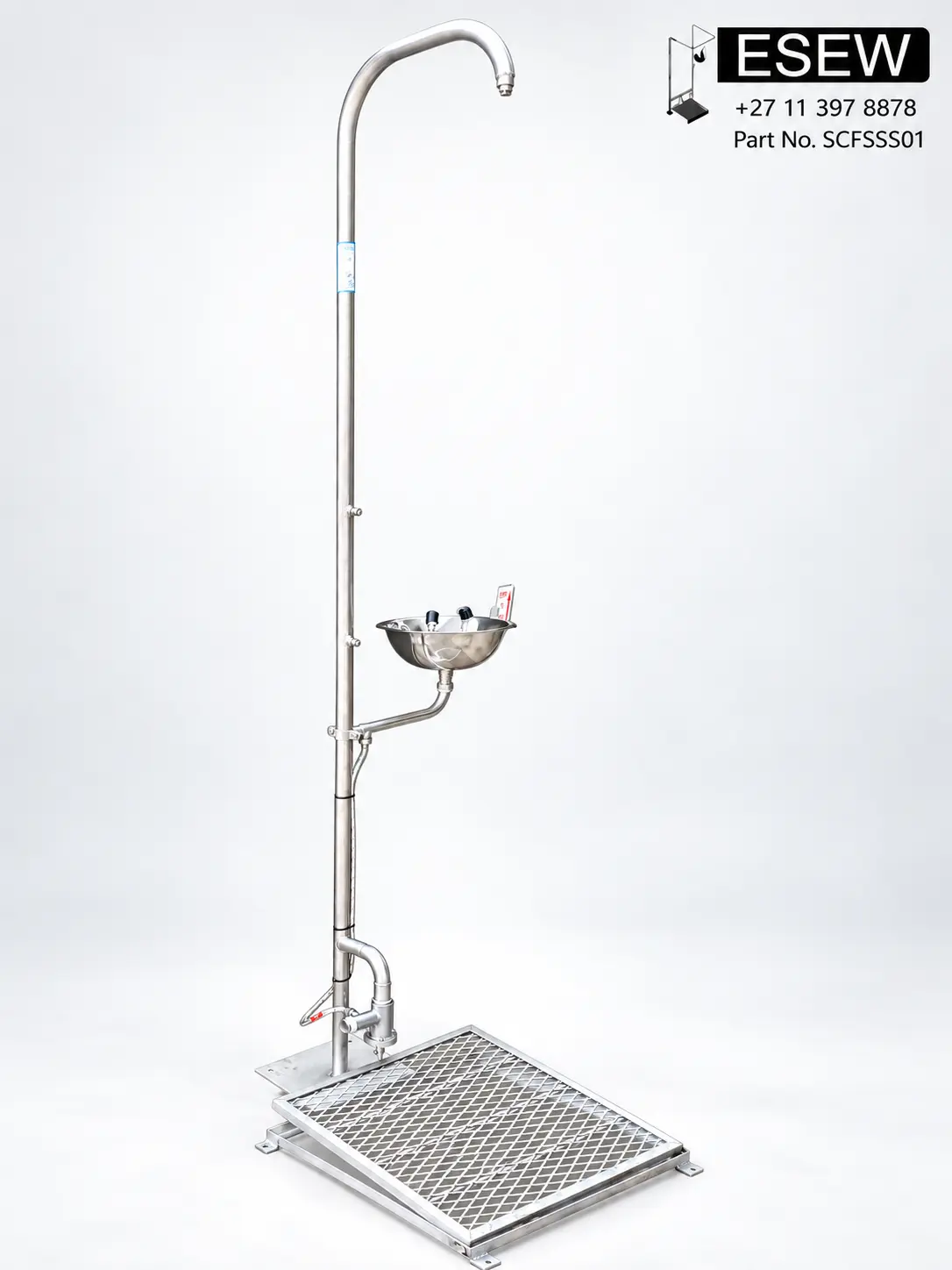
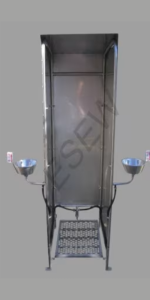
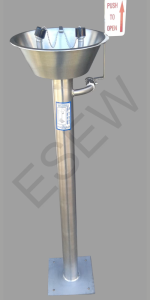
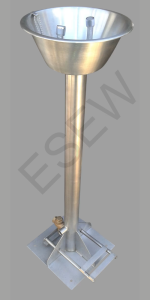
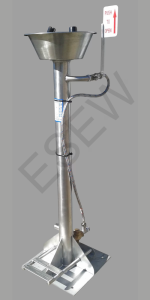
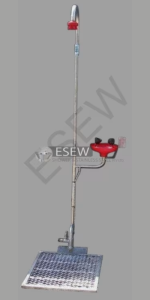
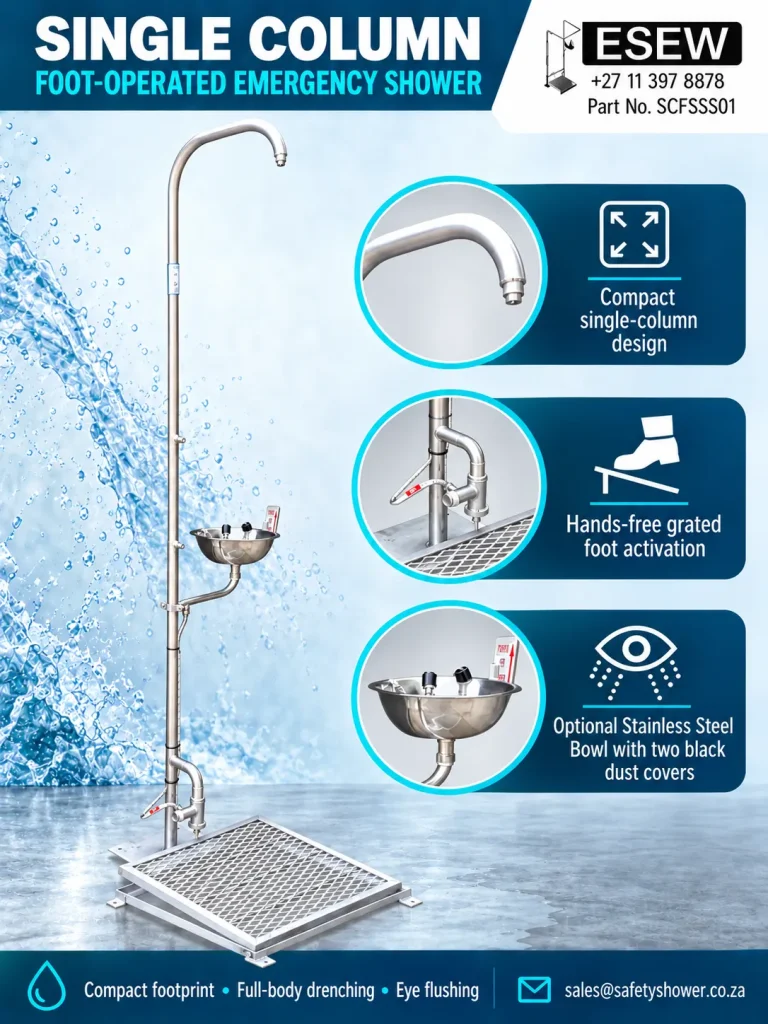
A single column emergency shower with optional eyewash bowls is a freestanding decontamination unit that delivers a high-volume shower and, where fitted, an integrated eyewash bowl from one vertical column, and ESEW Shower & Stainless Steel supplies this exact configuration across South Africa under Part No. SCFSSS01. The unit is built for facilities that need full-body flushing and eye irrigation from a single footprint rather than two separate stations. ESEW manufactures these columns in 304 or 316 stainless steel or mild steel, and every valve is engineered to open in one second or less so a worker exposed to a corrosive splash gets water moving before the injury worsens.
Speak to ESEW About Emergency Showers Today
Get pricing and lead times on the single column foot-operated emergency shower with optional eyewash bowl, Part No. SCFSSS01, built to ANSI/ISEA Z358.1-2014.
Water reaches the worker before a corrosive substance sets into the skin
Minimum 75.7 litres per minute flow rate
Covers the full body for a continuous 15-minute flush
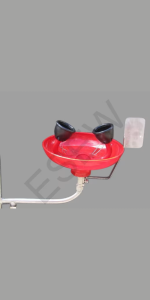
Optional integrated eyewash bowl on the same column
Saves floor space where a separate eyewash unit is not practical
304 or 316 stainless steel construction
Resists corrosion in chemical, laboratory and coastal environments
Stay-open valve, no need to hold the handle
Frees both hands so the worker can remove contaminated clothing
What Is a Single Column Emergency Shower with Optional Eyewash Bowls?
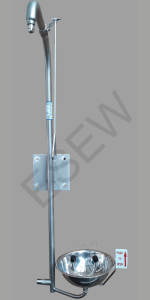
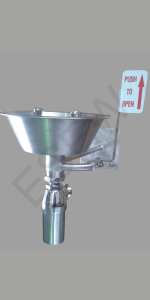
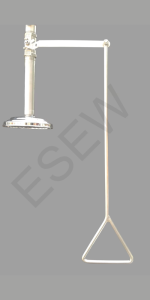
A single column emergency shower is a standalone vertical unit, usually mounted on a mild steel or stainless steel pole, that pairs a shower head with a pull rod or lever-activated valve. ESEW's version can be ordered with an eyewash bowl fitted lower on the same column, so a worker splashed with a hazardous substance gets both body and eye flushing from one point of contact. This differs from a two-column setup, which typically separates the shower and eyewash into distinct structures.
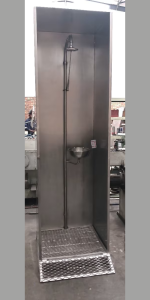
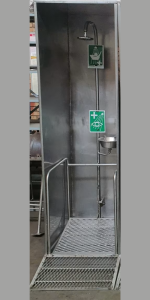
The single column format suits sites with tighter floor space, mezzanine walkways, or process lines where a compact footprint matters more than dual-user capacity. It remains a full emergency eyewash and safety shower station in function, just built around a single structural pole rather than a frame.
Core Design Features of Emergency Showers
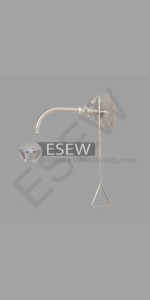
Pull rod or lever handle positioned for one-handed activation within one second, per ANSI/ISEA Z358.1-2014 guidance.
Shower head sized to deliver a minimum of 75.7 litres per minute across the whole body, not a narrow stream.
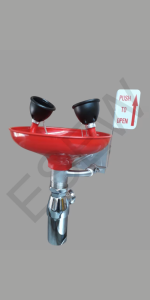
Optional eyewash bowl bracket fitted at a height suited to standing or seated use, plumbed from the same riser.
Frame material chosen from 304 stainless, 316 stainless, or mild steel, depending on the site's exposure to moisture or chemicals.
The column carries a single water riser from the supply line to the shower head, with a branch line feeding the eyewash bowl where one is fitted. Pulling the rod or lever opens the valve mechanically, and the valve stays open on its own so the worker does not need to keep a hand on the trigger. Water flow is set to meet the volume and pressure figures required for full-body decontamination.
Placement matters as much as the mechanism. The unit needs to sit within a clear, unobstructed 10-second walk of the hazard, on the same floor level, with nothing blocking the path in an emergency.
Emergency Shower Activation Sequence
What Happens During an Emergency Shower Flush Cycle
The valve locks open the instant the rod or lever is pulled, so both hands become free for removing clothing or assisting a colleague.
Water temperature should sit between 15°C and 38°C, tepid enough to prevent thermal shock during a prolonged 15-minute flush.
Where an eyewash bowl is fitted, it draws from the same supply, letting one worker treat eyes and body without moving to a second station.
Compliance and Performance Standards for Single Column Emergency Showers
ESEW builds its single column emergency showers to meet ANSI/ISEA Z358.1-2014, the benchmark referenced by OSHA under 29 CFR 1910.151(c) and, for construction sites, 29 CFR 1926.50(g). South African buyers use the same performance figures alongside SANS and EU compliance references when specifying equipment for chemical, mining, or pharmaceutical facilities.
These figures are not arbitrary. Flow rate, activation speed and water temperature are each tied to how quickly and thoroughly a chemical or corrosive substance can be diluted off skin and out of eyes before permanent damage sets in.
Emergency Shower Performance Figures That Matter
Flow rate must reach a minimum of 20 gallons (75.7 litres) per minute, sustained continuously for at least 15 minutes without dropping off.
Valve activation must occur in one second or less and remain open hands-free once triggered by the rod or lever.
Water temperature must stay tepid, between 15°C and 38°C, to avoid adding thermal injury to a chemical exposure.
The unit must sit within a 10-second, obstruction-free walk from the hazard, roughly 23 metres, on the same floor level.
Single Column vs Double Column Emergency Showers
Choosing between a single column and a double column configuration usually comes down to floor space, user volume, and whether eye irrigation needs its own dedicated fixture.
Feature
Single Column Shower
Double Column Shower
Footprint
Compact, one structural pole
Wider, two poles or a frame
Eyewash bowl
Optional, integrated on same column
Usually a separate fixed bowl unit
Best suited for
Tight walkways, single-user stations
Higher-traffic zones, dual access
Materials available
304, 316 stainless or mild steel
304, 316 stainless or mild steel
Compliance standard
ANSI/ISEA Z358.1-2014
ANSI/ISEA Z358.1-2014
Where Single Column Emergency Showers Are Installed Across South Africa
Facilities across South Africa install single column emergency showers wherever workers handle corrosive acids, solvents or toxic chemicals as part of daily operations. ESEW supplies units into chemical plants, laboratories, pharmaceutical manufacturing, food and beverage processing, mining operations, and oil and gas sites, matching the column material to the site's chemical exposure and climate.
Waste and water management facilities, along with general manufacturing plants, also specify these units on process lines where a full frame shower would take up more room than the layout allows.
Typical Emergency Shower Installation Points
Laboratory benches and fume hood exits, where a compact column fits between fixed cabinetry without blocking aisles.
Chemical mixing and dosing stations, positioned within the mandated 10-second travel distance from the hazard point.
Loading bays and tanker offload points, where corrosive or hazardous liquids are transferred and splash risk is highest.
Frequently Asked Questions
Does a single column emergency shower need to include an eyewash bowl?
No, the eyewash bowl is optional on ESEW's single column units. Sites can order the shower alone or specify the combined shower and eyewash bowl configuration depending on the exposure risk at that station.
What is the minimum flow rate required for a single column emergency shower?
The unit must deliver at least 20 gallons, or 75.7 litres, of water per minute. This flow rate needs to hold steady for a continuous 15-minute flush, matching the requirement set out in ANSI/ISEA Z358.1-2014.
How close does a single column shower need to be to the hazard area?
It must sit within 10 seconds of unobstructed travel time from the hazard, roughly 23 metres, on the same floor level with a clear path. Anything blocking that path, such as stored equipment or locked doors, takes the installation out of compliance.
What materials does ESEW use for single column shower frames?
ESEW manufactures the columns in 304 stainless steel, 316 stainless steel, or mild steel. The choice depends on how corrosive the site's chemical environment is and whether the installation is indoors or exposed to weather.
How long is the warranty on a single column emergency shower valve?
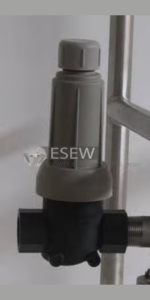
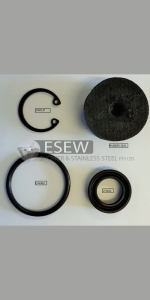
All shower valves supplied by ESEW Shower & Stainless Steel carry a 6-month warranty. Contact the sales team for details on servicing and replacement parts beyond that period.