Spill Kits in South Africa
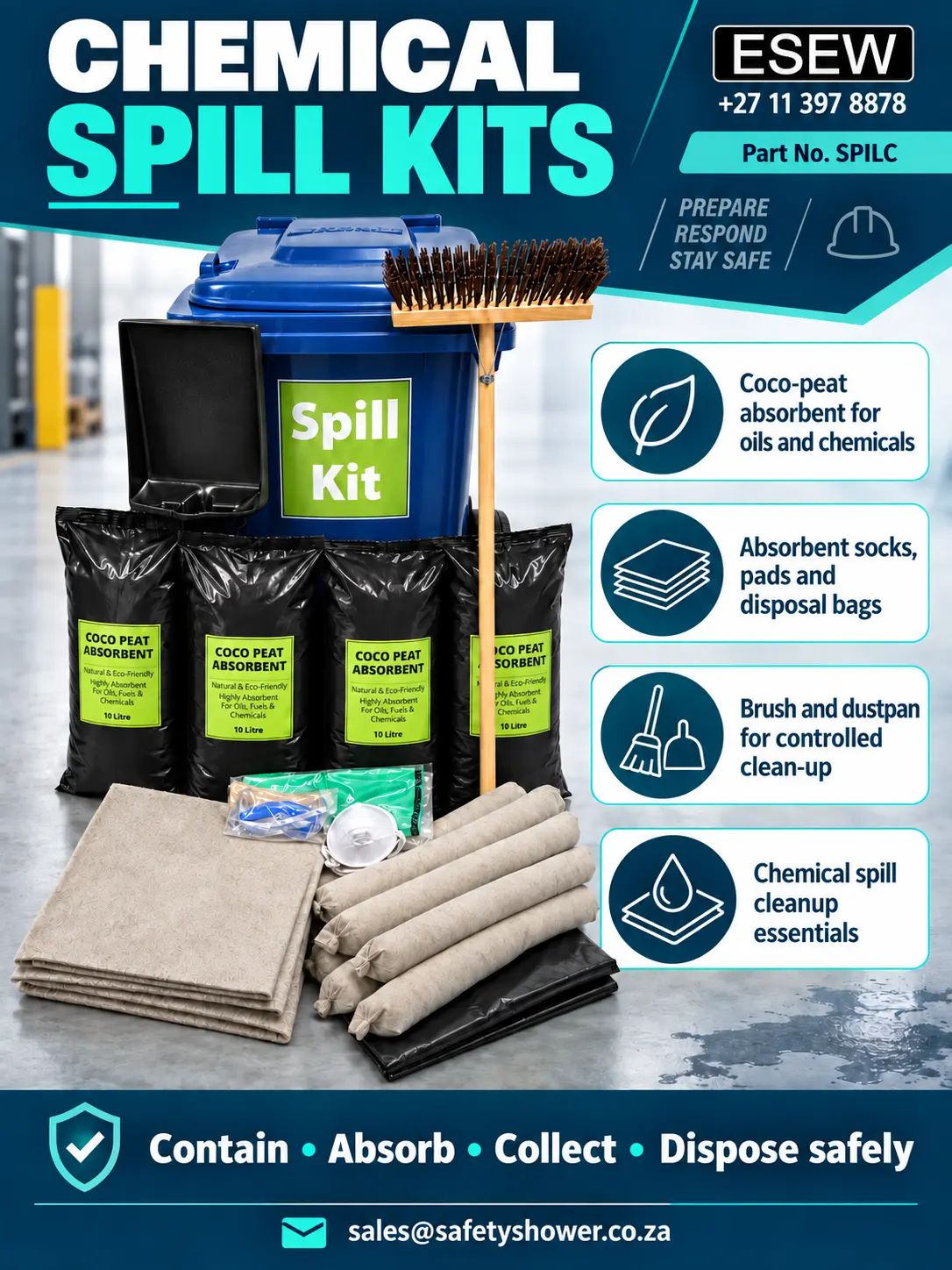
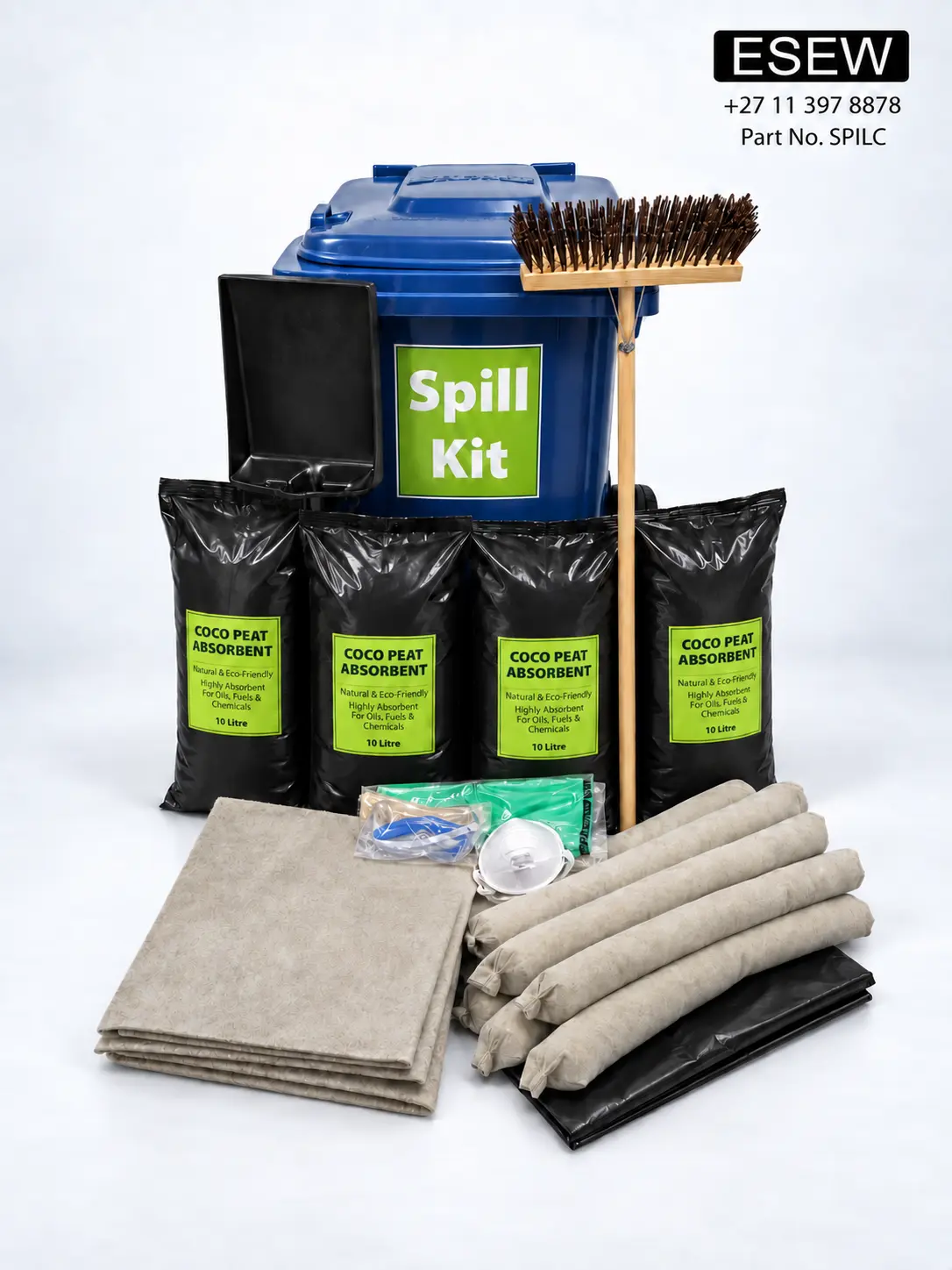
Spill Kits provide portable first-response materials for containing and cleaning small workplace spills, and ESEW Shower & Stainless Steel supplies these kits across South Africa under part number SPILC. Compatible absorbents, socks, pads, disposal bags, a brush and dustpan help trained staff contain, absorb, collect and prepare spilled material for safe disposal.
ESEW matches the spill kit configuration to the liquids handled on site, the expected spill volume, workplace conditions and the site's risk assessment. Personnel must confirm chemical compatibility before using any absorbent or disposal material.
Request Pricing and Lead Times
Speak to ESEW about spill-kit contents, capacity, delivery and lead times for Spill Kits (SPILC).
Key Takeaways
| Product feature | Site benefit |
|---|---|
| Rapid deployment | Keeps spill-response materials together and ready for use |
| Chemical spill cleanup | Supports safe containment, absorption, collection and disposal |
| Purpose-matched absorbents | Helps the site respond to compatible oils, fuels and chemicals |
| Inspection and replenishment | Keeps used, damaged or expired components replaced |
How Spill Kits Work
Raise the alarm, isolate the area and identify the spilled substance before approaching it. Trained personnel should select compatible PPE and spill-kit materials, stop the source when safe, surround the spill with absorbent socks and apply pads or loose absorbent from the outside inward. Follow the site's spill-response plan for the identified workplace hazard.
Collect the used absorbent with the brush and dustpan, place contaminated material in the supplied disposal bags, and follow the site's hazardous-waste procedure. Restock the kit immediately after use so it remains ready for the next incident.
Activation and Response Sequence
Spill Kit Contents, Compatibility and Selection
Spill kits may include coco-peat absorbent, absorbent socks, pads, disposal bags, PPE, and a brush and dustpan. ESEW matches kit contents to the expected liquid, spill volume, workplace layout and response plan.
Teams must verify that every absorbent and disposal component is compatible with the oils, fuels or chemicals handled on site. Keep the kit visible, accessible, labelled and protected from damage or contamination.
Spill Response Placement and Maintenance
Place spill kits close to identified risk areas without locating them where a spill could block access. Site procedures must define who may respond, which PPE is required, how to isolate the area and how contaminated absorbent will be handled and disposed of.
Facilities across Gauteng and South Africa use spill kits in vehicles, laboratories, workshops, warehouses, chemical stores and mobile maintenance teams. Inspect each kit on a planned schedule and after every use. Check seals, absorbent quantities, PPE, tools, disposal bags, labels and access.
Spill Kit Inspection Checklist
- Confirm the chemicals handled and the expected spill volumes.
- Position the kit close to identified risk areas with a clear access route.
- Verify that absorbents, PPE and disposal bags are compatible with site hazards.
- Keep the kit visible, labelled and protected from damage.
- Train responsible personnel in the site's spill-response procedure. Inspect and replenish the kit after every use and on the planned schedule.
- Quote part number SPILC when requesting support.
Frequently Asked Questions
What is the part number for this product?
The product part number is SPILC. Include this code in pricing, delivery and technical-support enquiries.
What types of spills can this kit handle?
Use the kit only for liquids confirmed as compatible with the supplied absorbents. The site's safety data sheets and spill-response plan must guide product selection and use.
Where should spill kits be placed?
Place kits close to identified spill risks while keeping the access route clear and outside areas where a release could block the equipment.
How often should the kit be checked?
Inspect the kit on the site's planned schedule and after every use. Replace used, damaged, contaminated or expired components immediately.
What should happen after a spill cleanup?
Bag and label contaminated absorbent according to the site's waste procedure, arrange compliant disposal and replenish the kit before returning it to service.
Visit ESEW Shower & Stainless Steel