What Is the Eye Wash Station For? Uses in South Africa
An eye wash station provides immediate flushing to dilute chemicals and wash loose contamination from the eyes after an accident. ESEW Shower and Stainless Steel manufactures and supplies eyewash stations and safety showers for South African workplaces, including the SAEB10 stand-alone eyewasher with hand and foot controls.
Table of Contents
- Key Takeaways
- What is an eye wash station for in the workplace?
- How to use an eye wash station after a chemical splash
- Where should an eye wash station be installed?
- Which eye wash station suits the exposure risk?
- How does the SAEB10 eye wash station operate?
- How should an eye wash station be checked?
- Frequently Asked Questions
Key Takeaways
| Operational goal | How the station helps |
|---|---|
| Immediate decontamination | Gentle flushing dilutes chemicals and removes loose contamination. |
| Accessible first aid | A clear route lets injured workers reach the station promptly. |
| Hands available | Suitable controls allow the user to hold the eyelids open. |
| Sustained flushing | Specify at least 15 minutes of equipment supply; follow exposure-specific advice. |
| Correct equipment | Choose eye flushing, body drenching or both according to the hazard. |
What is an eye wash station for in the workplace?
Eye wash station purpose
- An eye wash station flushes harmful substances and loose particles from the eyes after accidental exposure. It provides immediate first aid while someone arranges medical help. The equipment supports the workplace emergency response, alongside suitable eye protection, safe chemical handling and staff training.
Chemical splashes can occur during decanting, cleaning or maintenance. Dust may enter the eyes during workshop tasks. The response depends on what entered the eye and whether an object has pierced it.
Do not treat embedded metal or a high-speed impact as ordinary dust. Seek urgent medical care and never attempt to remove a penetrating object. The NHS eye injury guidance explains this distinction.
The wider category of emergency eyewash and safety shower equipment covers separate devices for eyes and body exposure. An eyewasher does not provide a full-body drench.
Train staff to identify the closest station before starting hazardous work.
How to use an eye wash station after a chemical splash
Eye wash station first aid
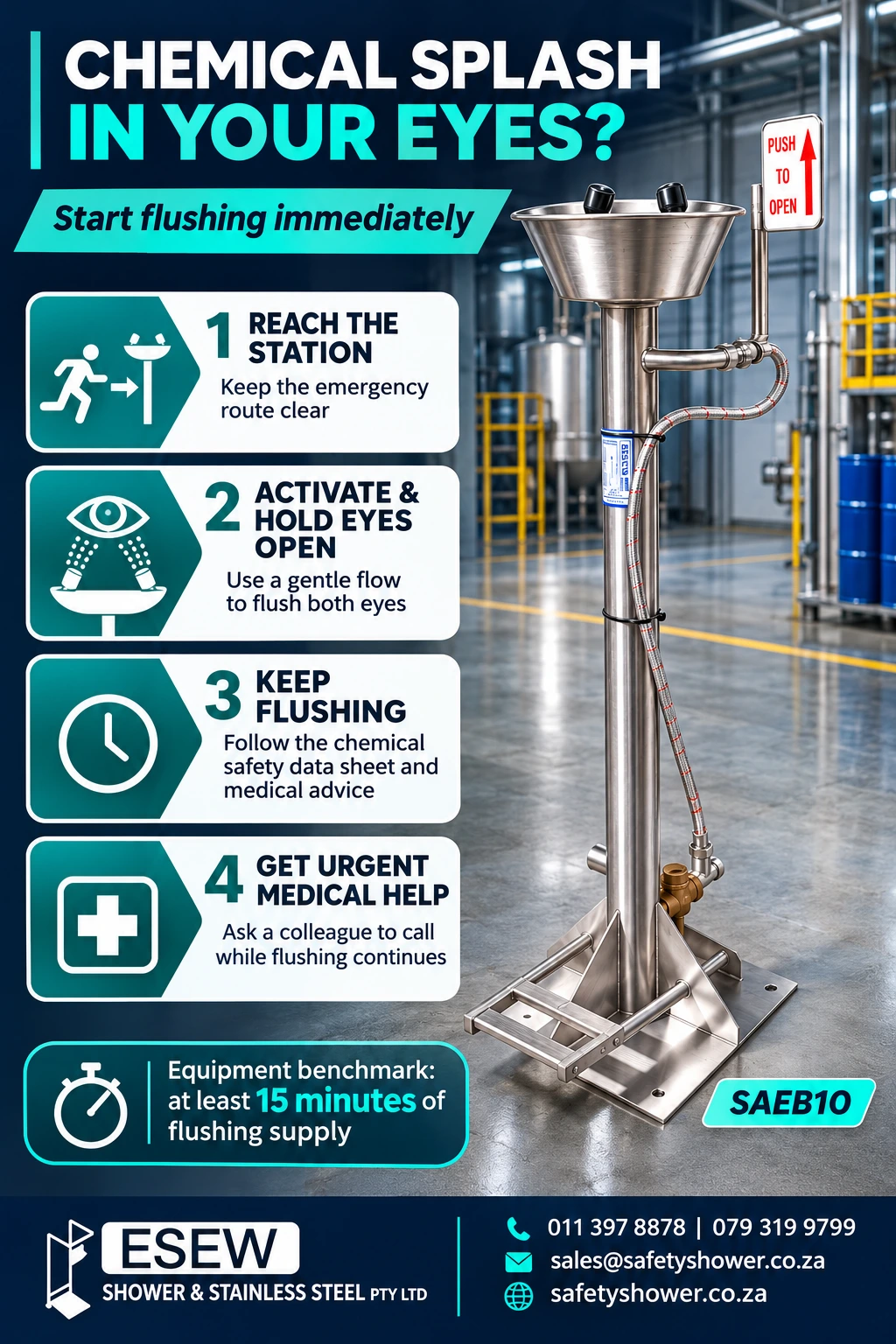
- Start flushing immediately with clean water or suitable eyewash fluid. Hold the eyelids open and keep the affected eyes in a gentle stream. Ask a colleague to arrange urgent medical help while rinsing continues. Follow the chemical safety data sheet and medical instructions about how long to flush.
Do not pause to find a special solution when clean water is available. Do not rub the eyes or try to neutralise a chemical with another chemical. Keep the product label or safety data sheet available for the treating clinician.
The CCOHS emergency eyewash guide distinguishes a station’s minimum 15-minute supply capacity from the treatment time an exposure needs. NHS guidance recommends at least 20 minutes of eye irrigation. Some chemicals require longer.
Do not wait until rinsing finishes to request help after a serious chemical splash. Another worker can make the call and bring the chemical information while the injured person continues flushing.
Where should an eye wash station be installed?
Eye wash station access
- Install an eye wash station close enough for an injured worker to reach promptly along a clear route. The ANSI/ISEA benchmark is access within 10 seconds. Assess the route under real working conditions, including doors, stored goods, machinery and the possibility that the person cannot see clearly.
Laboratories, chemical handling areas and workshops need different layouts. A laboratory technician may work at a bench, while a maintenance worker may handle chemicals beside a production line. Position equipment around the tasks and exposure points identified by the site assessment.
The approximate 16 to 17 metres sometimes associated with 10 seconds is a planning reference, not a guaranteed safe distance. Highly corrosive hazards may require closer equipment.
Sites in Gauteng should plan water availability and access before ordering. Use ESEW’s eye wash station requirements guide to prepare the specification, then confirm the final arrangement with the responsible safety professional.
Which eye wash station suits the exposure risk?
Eye wash station configuration comparison
- Choose the equipment according to the body areas a splash could reach. A stand-alone eyewasher provides eye flushing. A combined shower and eyewash adds body drenching. Personal eyewash bottles offer supplementary immediate rinsing, but they do not replace a station with the required continuous flushing supply.
Use the comparison below to discuss the equipment category before comparing prices. Check the selected model’s documentation and the installed supply separately.
| Equipment | Main purpose | Selection point |
|---|---|---|
| Stand-alone eyewasher | Dedicated eye flushing | SAEB10 has hand and foot controls. |
| Combined shower and eyewash | Eye flushing and body drenching | Check operation and supply for the specified combination. |
| Personal eyewash bottle | Supplementary immediate rinsing | Does not replace a suitable continuous-supply station. |
ESEW offers single-column configurations with eyewash bowls and a four-column booth configuration with an eyewash bowl. Confirm the supplied components and controls for the quoted model.
Where both eyes and clothing could be contaminated, discuss combined equipment during the assessment. ESEW’s emergency shower manufacturer guide covers broader purchasing considerations.
How does the SAEB10 eye wash station operate?
SAEB10 eye wash station controls
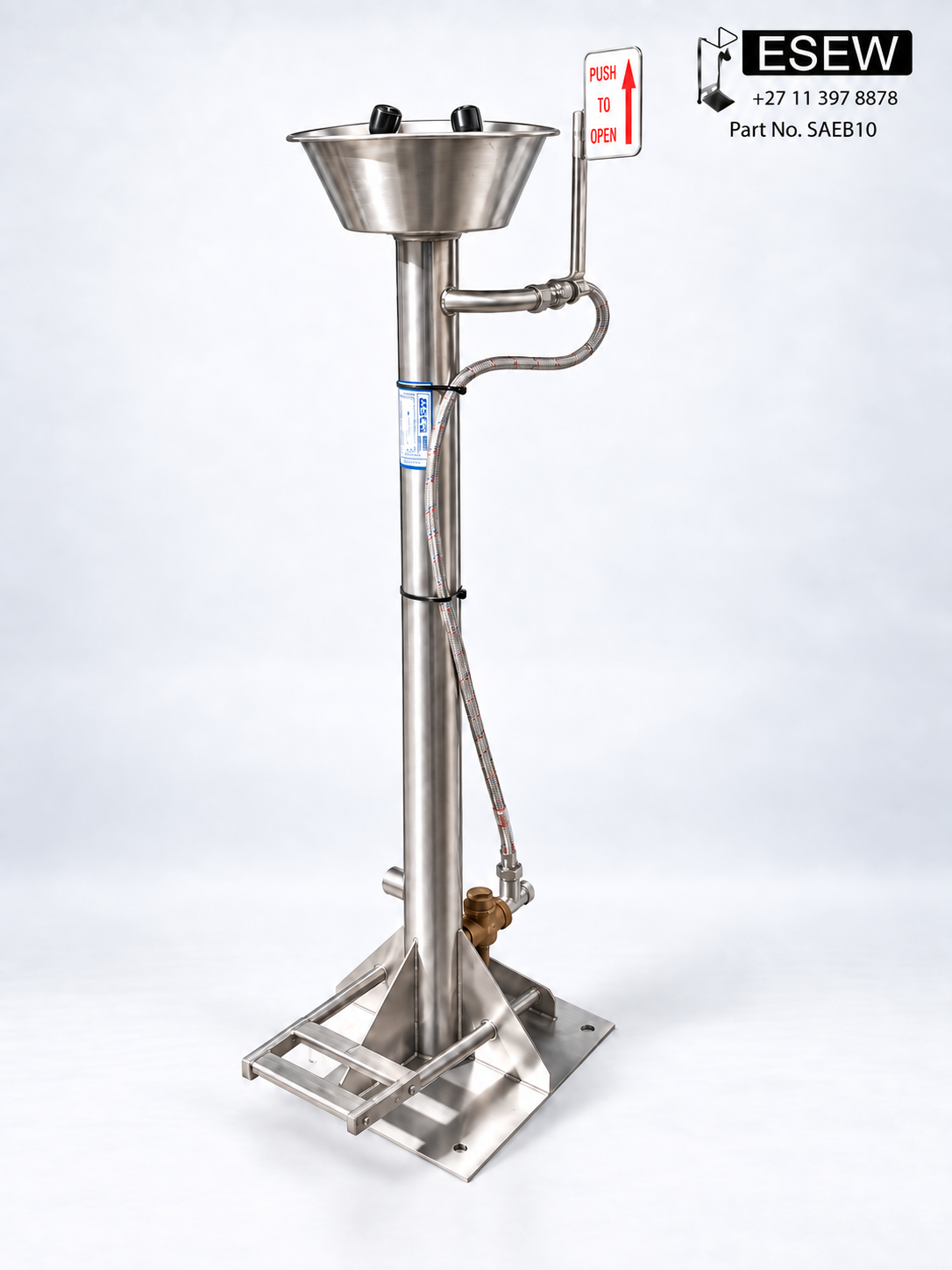
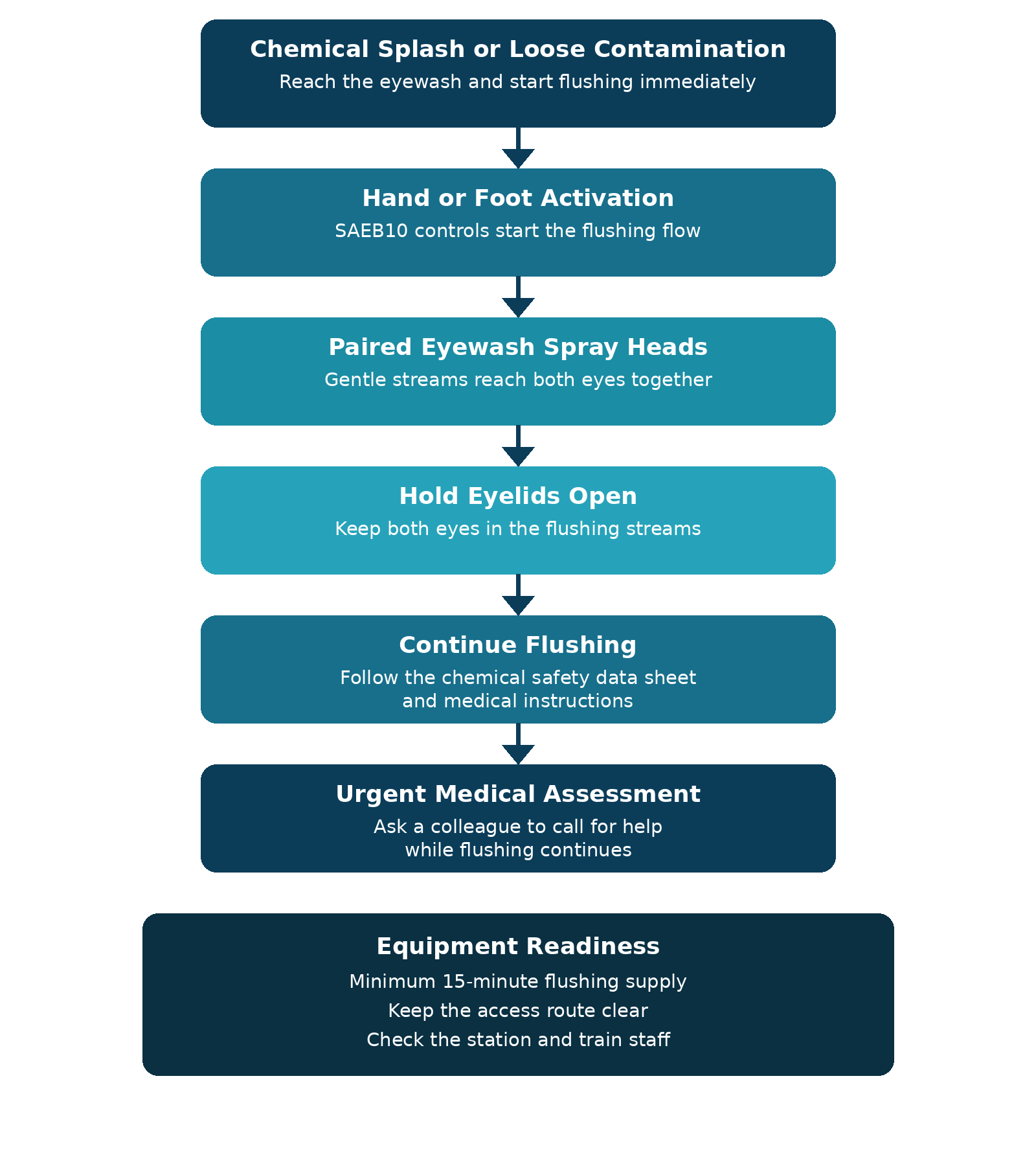
- The SAEB10 stand-alone combo operated eyewasher uses hand or foot activation to start eye flushing. Its floor-mounted structure supports the bowl and paired spray heads. The user positions the eyes over the streams and holds the eyelids open. This model provides a dedicated eyewash point without an overhead body shower.
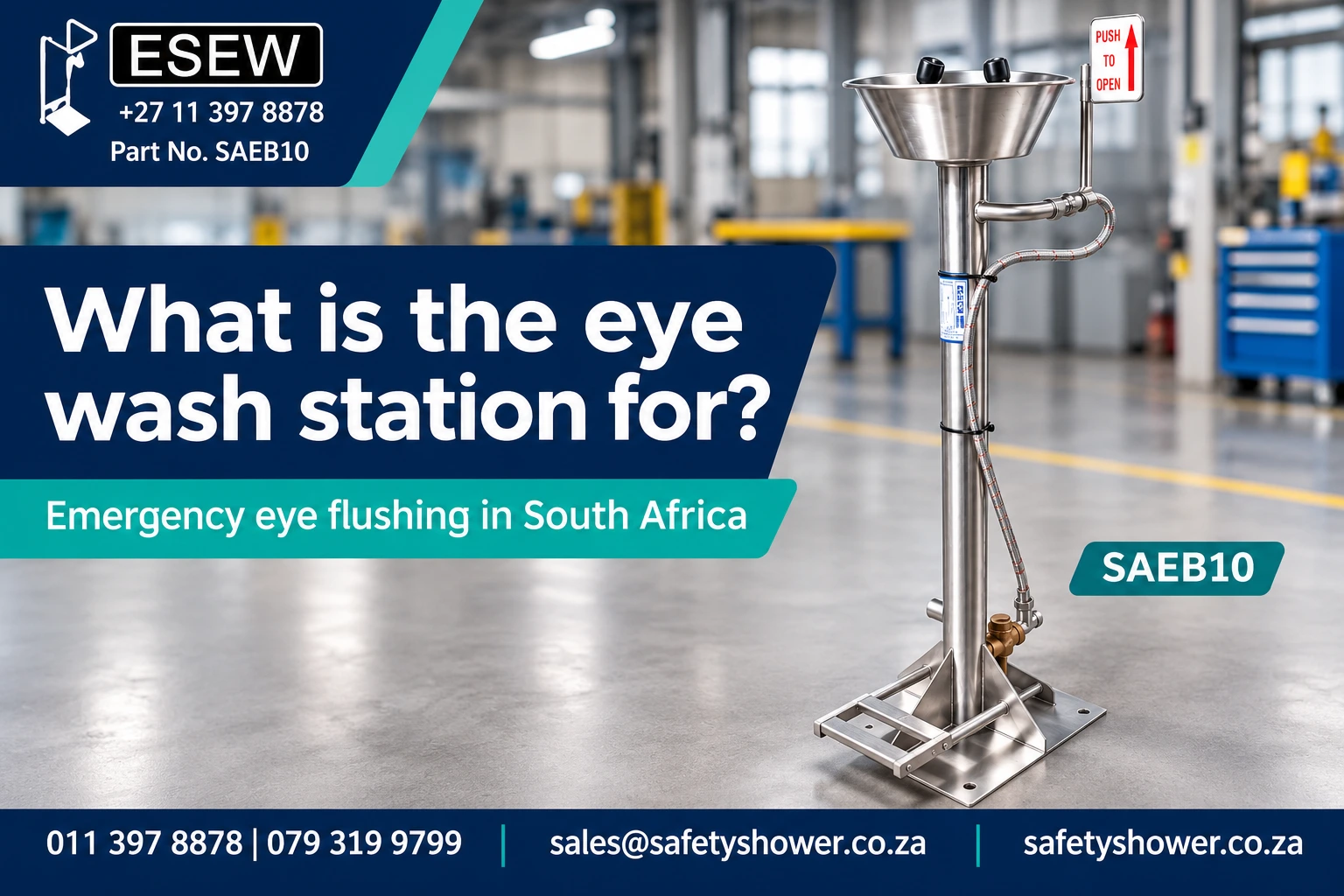
The word “combo” in this model’s name refers to its operating controls. The supplied product image shows the hand control beside the bowl and the foot pedal at the base. View the SAEB10 stand-alone eyewasher for the product details.
Confirm the specified water connection, operating conditions and installation requirements with ESEW before connecting the unit. Check the completed installation before staff rely on it during an emergency.
The operating sequence below shows how activation leads to eye flushing and medical assistance. Position the bowl and controls so users can reach them and hold their eyes over the streams without stretching around an obstruction.
How should an eye wash station be checked?
Eye wash station maintenance
- Assign a named person to check access, cleanliness and operation. Activate plumbed equipment weekly according to the manufacturer’s instructions, and arrange the required annual performance inspection. Record faults and corrective work. A station must remain ready between inspections, with clear signage and an unobstructed approach.
The ISEA selection, installation and use guide explains that weekly activation checks supply and clears stagnant sections. It is not automatically a full 15-minute flow test.
OSHA’s contaminated eyewash water guidance describes infection risks from poor upkeep. Follow the instructions for water quality and any self-contained unit’s fluid replacement schedule.
Give ESEW the hazard details, proposed location and available water supply when requesting a quotation. The eye wash station manufacturer comparison guide helps organise questions about specifications and support. Check applicable South African duties separately from international equipment benchmarks.
Store the manufacturer’s instructions where the maintenance team can find them.
Frequently Asked Questions
What is the eye wash station for in a small workshop?
It provides immediate eye flushing after a chemical splash or loose contamination. The workshop’s risk assessment should determine whether an eyewasher, a combined shower unit or other emergency equipment is needed.
Can an eye wash station remove metal shavings from an eye?
Gentle flushing may help with loose surface contamination. A fragment embedded in the eye or an injury caused by a high-speed particle needs urgent medical assessment. Do not try to pull the object out.
Should chemical eye flushing stop after 15 minutes?
Do not treat 15 minutes as an automatic stopping point. Follow the chemical safety data sheet and medical instructions, which may require longer flushing. Arrange urgent medical help while rinsing continues.
Does the SAEB10 eye wash station include a body shower?
No. SAEB10 is a stand-alone eyewasher with hand and foot controls. Ask ESEW about a shower-and-eyewash configuration if the exposure risk includes the body.
Can a small eyewash bottle replace a fixed eye wash station?
A small bottle can provide supplementary immediate rinsing. It does not replace equipment capable of the required continuous flushing supply. Assess portable and fixed options against the site’s hazards and manufacturer instructions.
Request Eye Wash Station Specifications
Send ESEW Shower and Stainless Steel the site details and chemical information for a model-specific quotation. Call 011 397 8878, WhatsApp 079 319 9799 or email sales@safetyshower.co.za.