Top Eye Wash Station Manufacturers in S.A.
The top eye wash station manufacturers in South Africa should provide equipment that matches the workplace hazard, clear specifications and dependable replacement support. ESEW Shower and Stainless Steel manufactures and supplies eyewash stations and safety showers, including stand-alone and combined configurations for industrial premises.
Table of Contents
- Key Takeaways
- Eye Wash Station Manufacturers in South Africa: what to compare
- Eye Wash Station Manufacturers: compare station configurations
- Eye Wash Station Manufacturers: materials and operating controls
- Eye Wash Station Manufacturers: performance evidence
- Eye Wash Station Manufacturers: water supply and site layout
- Eye Wash Station Manufacturers: quotations and ongoing support
- Frequently Asked Questions
Key Takeaways
| Purchasing goal | Mechanism and benefit |
|---|---|
| Match the hazard | Select eye flushing, body drenching or both. |
| Confirm controls | Hand or foot activation supports practical access. |
| Check construction | Specify compatible components and mounting. |
| Verify performance | Request model-specific evidence and commissioning checks. |
| Plan support | Confirm parts, lead times and maintenance duties. |
Eye Wash Station Manufacturers in South Africa: what to compare
How should buyers assess Eye Wash Station Manufacturers?
- Compare manufacturers against the same written brief. Check the equipment category, operating controls, component materials, installation requirements and support arrangements. Ask each business to identify the exact model offered and explain any exclusions. A clear specification helps buyers compare complete proposals instead of judging suitability from photographs or headline prices.
A laboratory, battery charging area and chemical transfer bay can present different exposure risks. Start with the substances handled, their safety data sheets and the tasks workers perform. The term emergency eyewash and safety shower station covers equipment with different functions.
ESEW operates from Jet Park, Boksburg, in Gauteng. ESEW supplies stand-alone eyewash stations, wall-mounted eyewash bowls and showers with eyewash bowls. The stand-alone combo eyewasher has hand and foot controls. A combined shower and eyewash station provides both body drenching and eye flushing in one installation.
A useful shortlist records who makes the equipment, who supplies service parts and who accepts responsibility for installation. Ask the supplier to resolve gaps before the order reaches procurement.
Eye Wash Station Manufacturers: compare station configurations
Which eyewash configuration fits the site?
- Choose a stand-alone eyewasher where the assessment calls for dedicated eye flushing. Consider a shower with an eyewash where workers face both eye and body exposure. Confirm the selected configuration, clear approach space and control arrangement. A product name alone does not establish which functions the quoted equipment includes.
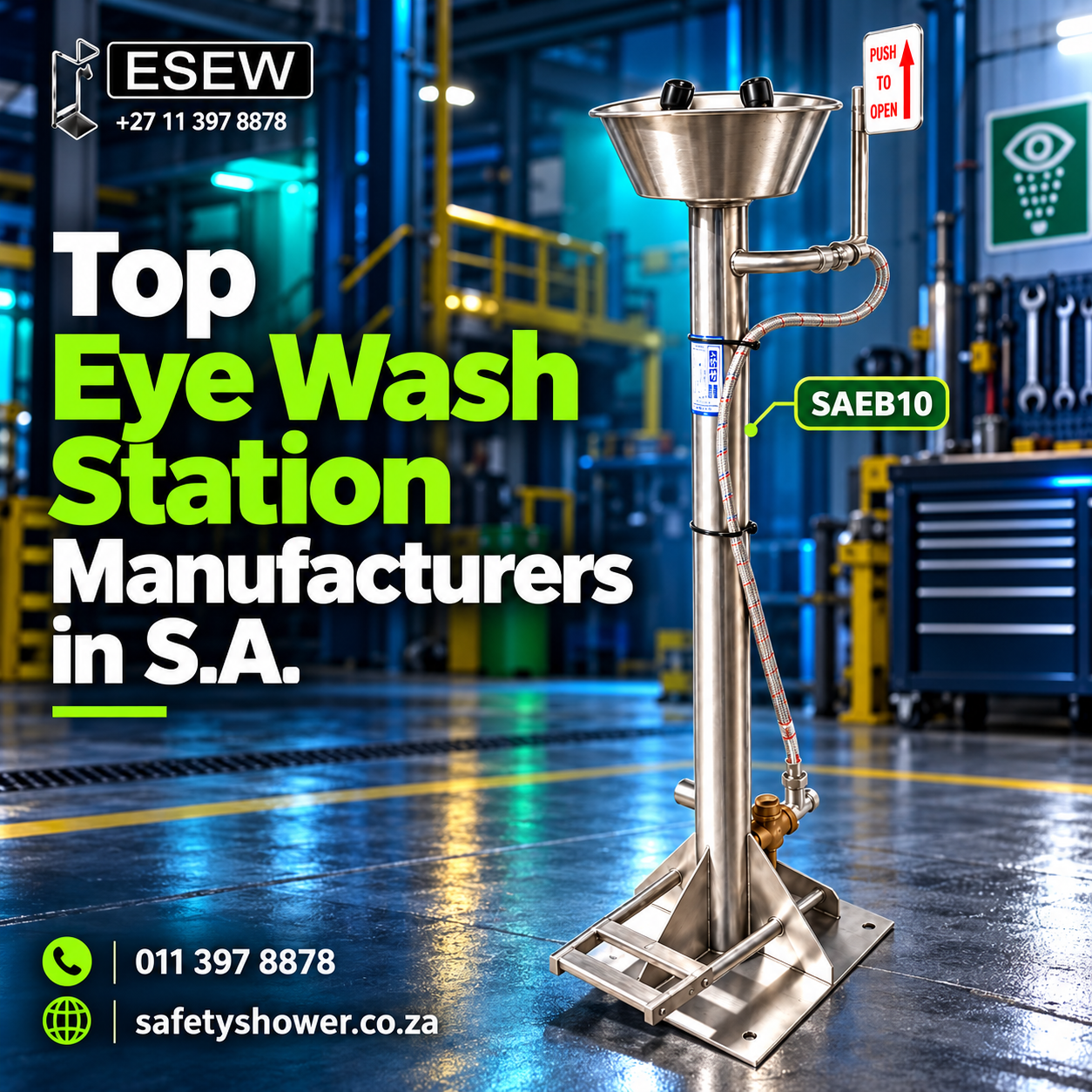
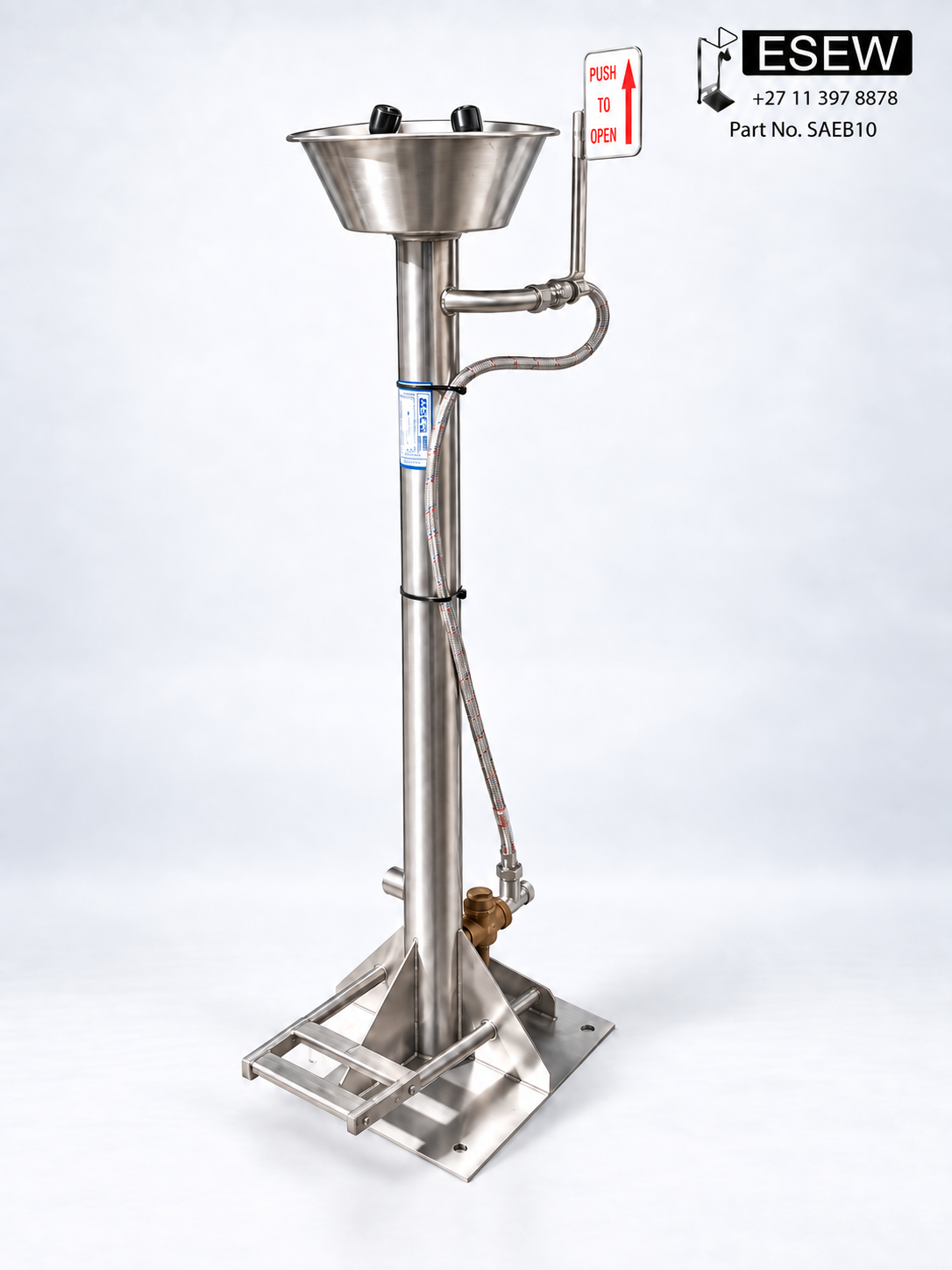
ESEW’sSAEB10 stand-alone combo operated eyewasher. The unit has hand and foot controls. It provides a dedicated flushing point without an overhead body shower.
Buyers can also review the single column unit with optional eyewash bowls and the double column foot operated bowl configuration. Confirm the current bowl material and controls in the written quotation.
Use the comparison below to organise the enquiry. Ask for drawings when equipment must fit an existing plant room or production line.
| Configuration | Function | Check before ordering |
|---|---|---|
| Stand-alone SAEB10 | Dedicated eye flushing | Hand and foot controls; supply details |
| Single column with eyewash option | Shower with specified eyewash configuration | Included bowl and controls |
| Double column with bowl | Combined functions as specified | Bowl material, entry and mounting |
Eye Wash Station Manufacturers: materials and operating controls
What construction details should the quotation state?
- Ask Eye Wash Station Manufacturers to identify the frame, bowl, valve, seal and pipework materials separately. Confirm how workers activate the station and how the flow stays on. Obtain written compatibility advice for the chemicals and environment involved, then check the delivered unit against the approved model and component schedule.
A polished bowl does not establish the grade of every component. Request a material schedule rather than a broad description such as “stainless steel unit”. Include the chemical names, concentrations and cleaning agents used around the installation.
Inspect the mounting plate, pedal clearance, exposed connections and access to serviceable parts. A station that fits on paper may become difficult to maintain once nearby machinery occupies the available space.
For SAEB10 enquiries, quote the part number and identify the required hand and foot controls. Ask ESEW to confirm dimensions, connections and the supplied components before purchase.
Keep approved drawings with the order. These records help maintenance teams identify the correct replacement parts later.
Eye Wash Station Manufacturers: performance evidence
What evidence should buyers request before ordering?
- Request model-specific information for flow, spray pattern, operating pressure and activation. Ask which standard the manufacturer uses and what testing supports the claim. Check that the proposed water supply can sustain the specified equipment. Equipment documentation and verification at the installed location answer different questions and both deserve attention.
The ISEA equipment selection guide describes ANSI/ISEA benchmarks, including 15-minute flushing capacity, tepid fluid, activation within one second and continued operation until intentionally closed. Combination equipment needs verification during simultaneous use.
These benchmarks help structure a technical enquiry. A general reference to ANSI/ISEA does not prove independent certification of a particular ESEW model. Request the documentation that applies to the exact unit offered.
Ask the project’s competent assessor to establish the applicable South African requirements. Keep imported guidance distinct from local legal obligations and the site’s adopted specifications.
ESEW’s eye wash station requirements guide provides related reading for the purchasing discussion.
Eye Wash Station Manufacturers: water supply and site layout
What should the installation plan include?
- Give the manufacturer the proposed location, available water-supply details and installation photographs. Confirm access, mounting, temperature control, pressure and discharge arrangements before delivery. Assign responsibility for plumbing and commissioning in writing. The completed system must work at the installation point, where nearby equipment and site conditions can affect practical access.
The CCOHS guide to emergency eyewash equipment explains hazard-based selection and accessible positioning. An eyewash serves eye flushing; a body shower performs a different task. Select the required functions from the exposure assessment.
Walk the proposed route with the safety team. Check for pallets, doors, changes in level and equipment that could block the approach. Plan discharge so flushing water does not create a new walking hazard.
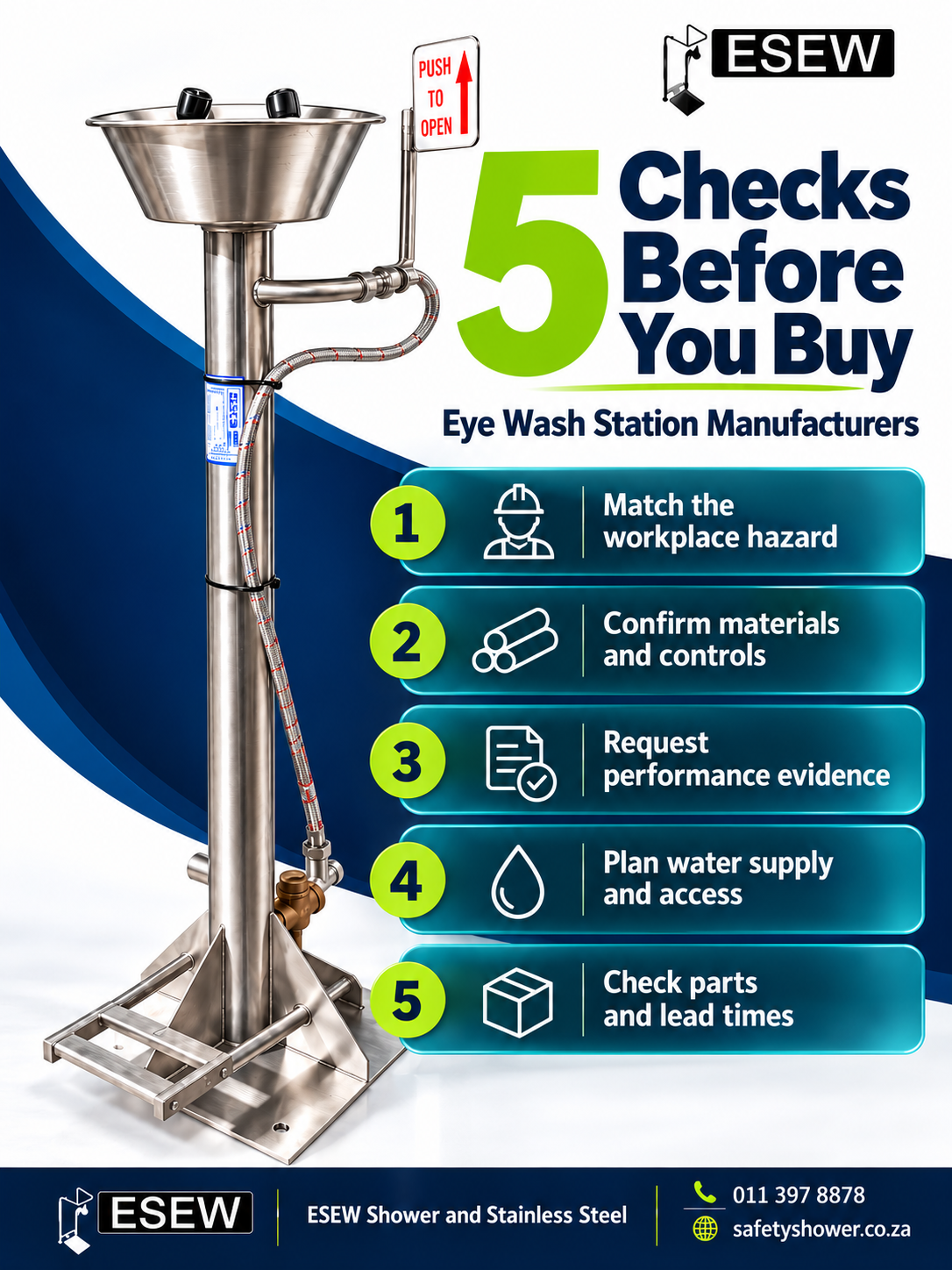
The diagram below follows the manufacturer selection and installation process, from assessing the workplace hazard to arranging ongoing support. Confirm the equipment specification and responsibilities for each site.
Record the commissioning results and give the maintenance team the final instructions.
Eye Wash Station Manufacturers: quotations and ongoing support
How should businesses compare total project costs?
- Request an itemised quotation covering the model, materials, controls, delivery and agreed installation scope. Confirm VAT, lead times, warranty terms and replacement-part availability. Compare every proposal against the same requirements. Clear responsibilities reduce disputes when equipment arrives and help the site organise maintenance throughout the station’s service life.
An equipment price may exclude anchoring, plumbing, drainage work or commissioning. Separate these costs before comparing offers. Confirm the delivery address and any site restrictions that affect unloading or access.
Ask how the supplier handles damaged components, replacement spray heads and control faults. Keep the model number, approved specification and service contact together in the maintenance records.
Assign routine checks and worker training before the station enters service. Follow the manufacturer’s instructions and the inspection schedule adopted by the site.
For broader product selection, read ESEW’s South African emergency shower manufacturer guide. Send ESEW the chemical information, site location and water details when requesting a quotation, and include SAEB10 for the illustrated eyewasher.
Frequently Asked Questions
Which Eye Wash Station Manufacturers should a Gauteng factory shortlist?
Shortlist manufacturers that can document the proposed equipment and support it after delivery. ESEW Shower and Stainless Steel is based in Boksburg; compare its model-specific proposal against the factory’s written requirements.
Can the SAEB10 eyewasher operate by hand and foot?
ESEW describes SAEB10 as a stand-alone eyewasher with hand and foot operation. Confirm the current control arrangement and dimensions when requesting a quotation.
Can a stand-alone eyewash station replace a body shower?
A stand-alone eyewasher provides eye flushing and does not include a body shower. The workplace exposure assessment determines whether the site needs an eyewash, a body shower or both.
What should a business send ESEW for an eyewash station quotation?
Provide the site address, chemical safety data sheets, installation photographs and available water-supply details. Include the preferred model, required controls and delivery requirements.
Request Eye Wash Station Specifications
Send ESEW Shower and Stainless Steel the site details and chemical information for a model-specific quotation. Call 011 397 8878, WhatsApp 079 319 9799 or email sales@safetyshower.co.za.