Emergency shower manufacturer selection in South Africa
What makes an emergency shower manufacturer the best choice?
- Choose a manufacturer that can explain how the proposed unit meets the site’s exposure risks. Request a written specification covering materials, controls, flushing performance and installation requirements. Compare that evidence with the purchase price, delivery arrangements and replacement support before placing an order for a new workplace installation.
A chemical transfer bay needs a different assessment from a laboratory sink. Identify whether a splash could affect the eyes, body or both, then specify the equipment category. The term emergency eyewash and safety shower station covers several devices with distinct functions.
ESEW operates from Jet Park, Boksburg, in Gauteng. ESEW offers modular shower options, including single-column units, double-column units, four-column booths and a 1,000-litre tank-fed shower. Buyers can specify a shower with an eyewash bowl or a separate eyewash station according to the equipment their workplace requires.
Send the manufacturer the chemical safety data sheets, installation photographs and available floor dimensions. These details help turn a broad enquiry into a specification that a buyer can check.
Emergency shower manufacturer materials and construction
Which materials should an emergency shower manufacturer specify?
- Ask the manufacturer to specify the frame, bowl, pipework, valves and seal materials separately. ESEW offers 304 stainless steel, 316 stainless steel and mild steel structures across relevant products. The correct choice depends on chemical exposure, atmospheric conditions, protective finishes and maintenance, rather than the appearance of polished metal.
Grade 316 stainless steel generally offers better resistance to chloride exposure than grade 304, but neither grade resists every chemical. Obtain compatibility advice for the substances and concentrations present at the site. Inspect welds, mounting points and exposed fittings as part of the procurement review.
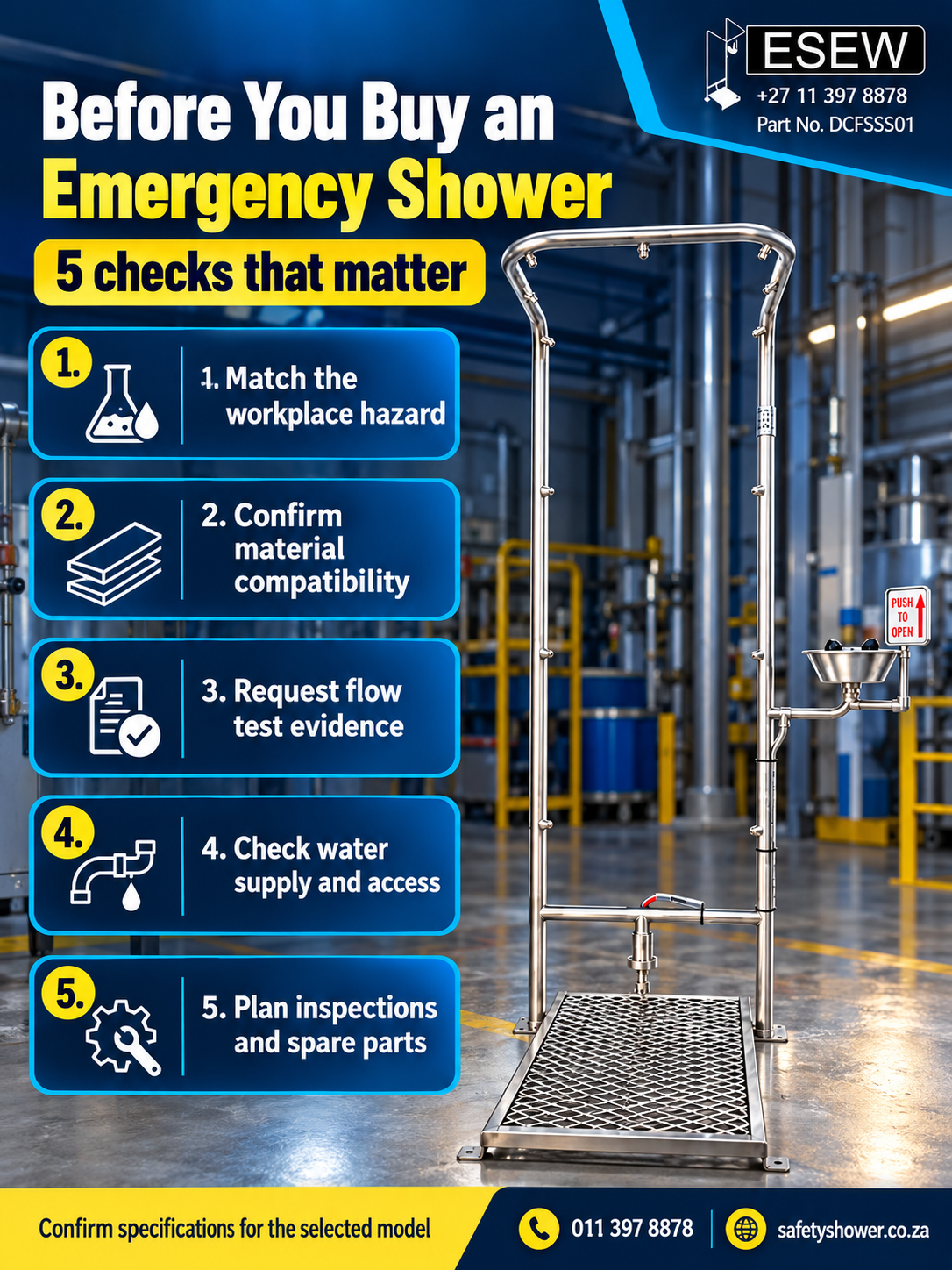
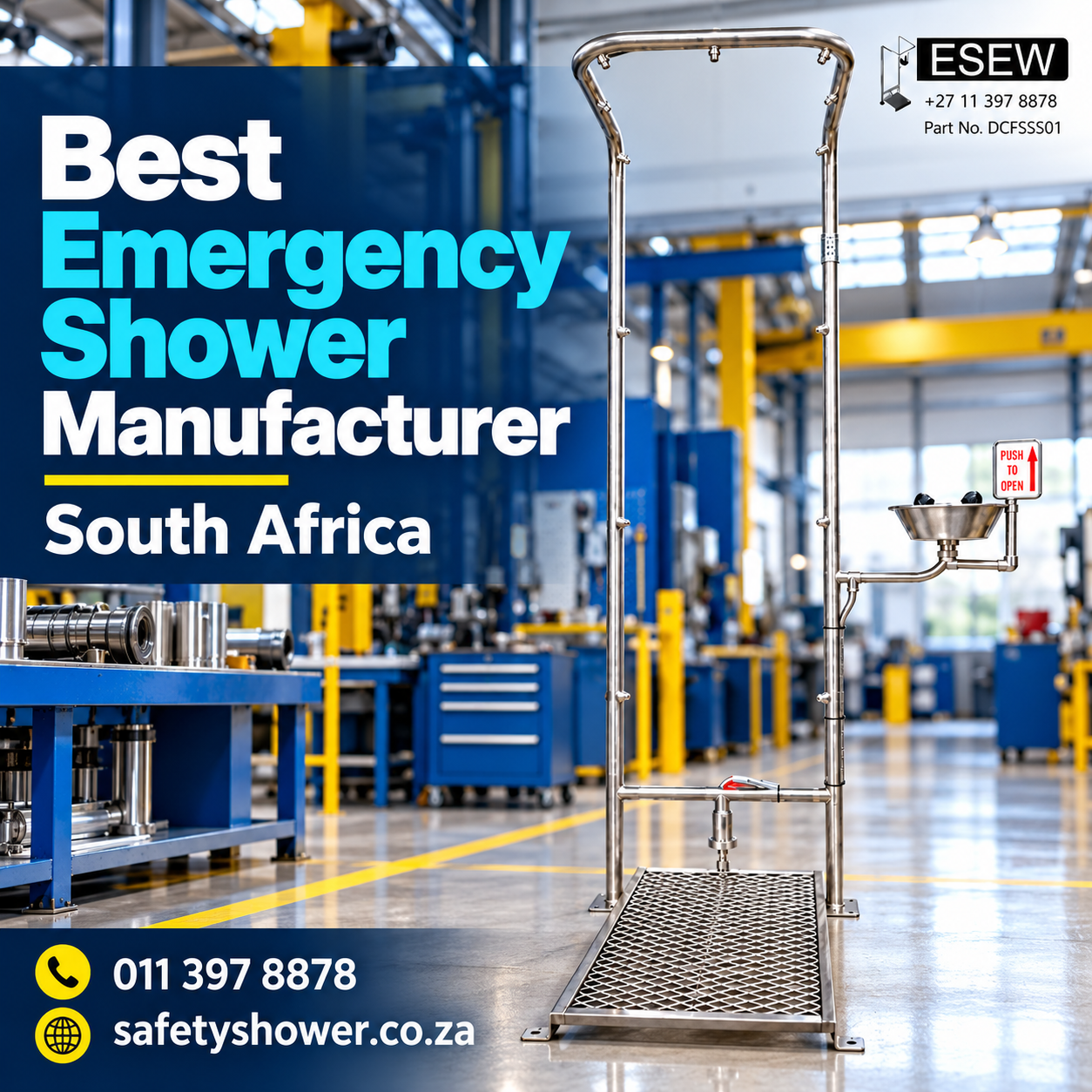
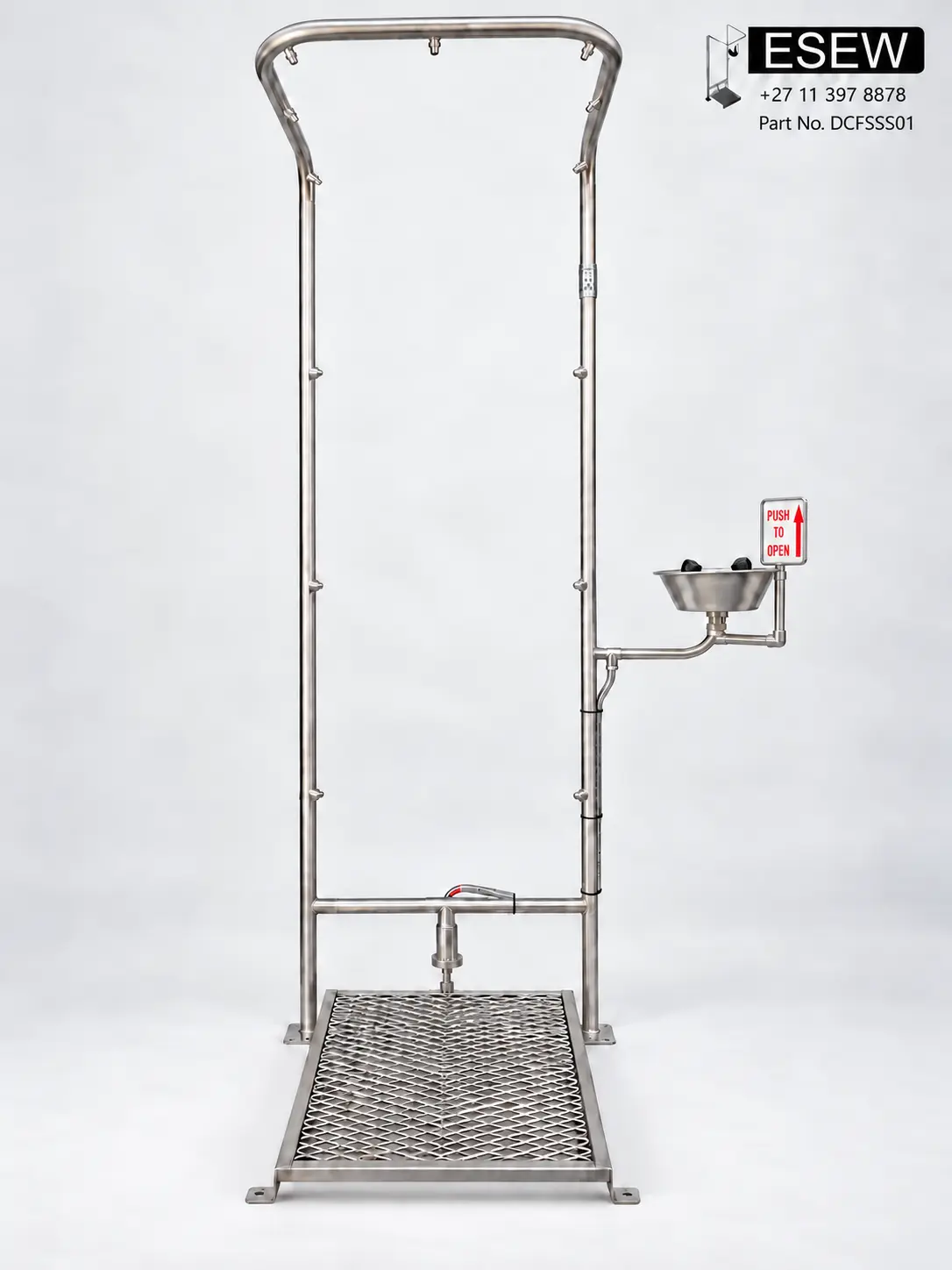
The main product image shows ESEW’s double column foot operated bowl unit, part DCFSSS01. Confirm the quoted bowl, push plate, floor platform and operating controls against the current specification before ordering.
Request a dimensioned layout for access and anchoring. A strong frame cannot compensate for unsuitable fixings or a poorly prepared base, and the bowl material does not prove the performance of the eyewash outlets.
Emergency shower manufacturer product range comparison
Which emergency shower manufacturer configuration suits the site?
- Select the configuration from the exposure assessment and available installation space. Single column units offer one structural support, double column units use a two-column frame, and booth units define a dedicated washing area. A stand-alone eyewasher serves eye irrigation and does not include the body-washing function of a shower.
Compare ESEW’s single column shower range with its double column shower range. Where the project needs a defined booth structure, review the four column booth with eyewash bowl.
For a dedicated eye-washing point, the SAEB10 stand-alone eyewasher provides hand and foot operation. Confirm each model’s current configuration in writing.
Check the access space around every proposed unit.
| Configuration | Structural arrangement | Selection check |
|---|---|---|
| Single column | One supporting column | Footprint and specified eyewash option |
| Double column | Two-column frame | Controls, anchoring and clear entry |
| Four column booth | Defined washing area | Access and installation dimensions |
| Stand-alone eyewasher | Dedicated eye irrigation point | Whether a separate body shower is needed |
Emergency shower manufacturer performance evidence
What test information should an emergency shower manufacturer provide?
- Request model-specific evidence for flow, spray coverage, activation and operating pressure. ANSI/ISEA guidance uses a minimum 15-minute flushing capacity and calls for combination components to meet their requirements during simultaneous operation. A brochure photograph or a general statement about compliance cannot establish how the installed equipment will perform.
The ISEA equipment selection guide explains the performance and installation benchmark. A standard reference does not prove that every ESEW model carries independent certification. Request the documentation applicable to the exact unit in the quotation.
The water system also matters. A combination unit needs enough pressure and volume while its shower and eyewash operate together. Tank size alone cannot establish usable flushing duration; the selected flow rate and available water volume determine that.
ESEW’s guide to eye wash station requirements explains related selection checks. Ask a competent assessor to verify the completed installation against the applicable project requirements.
Keep the approved specification with the purchase records.
Emergency shower manufacturer installation planning
How should an emergency shower manufacturer support system planning?
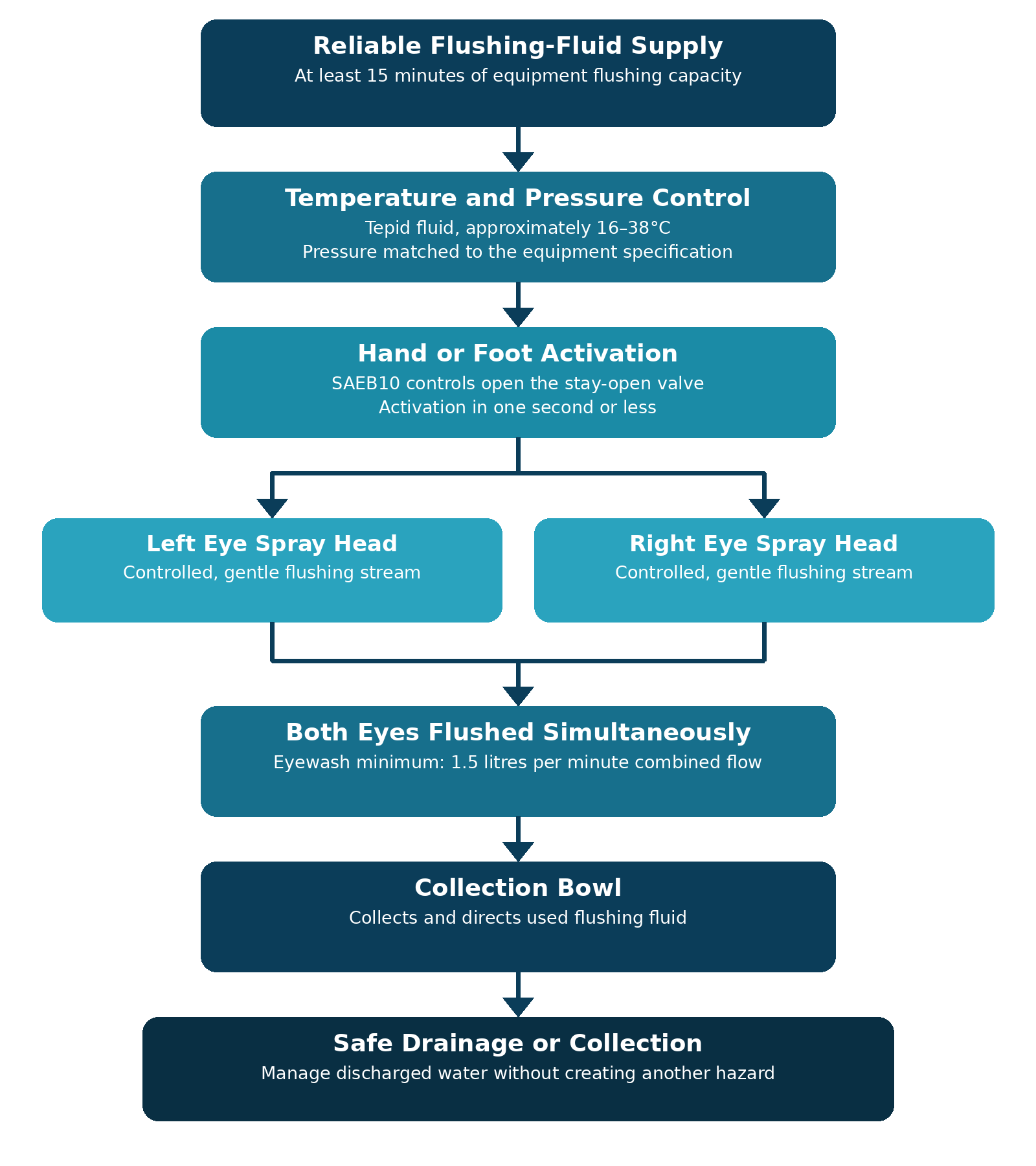
- Give the manufacturer the proposed position, water-supply information and expected operating conditions before ordering. Check the access route, mounting base, water quality, temperature control and drainage. The supply designer must account for the selected equipment’s operating requirements, including simultaneous use where the unit combines body drenching and eye irrigation.
A site walk-through often reveals problems that a quotation cannot show. Pallets can block the approach, a nearby process can heat exposed pipework, and discharge can spread contamination across a walking route. Address these conditions before commissioning.
The CCOHS emergency equipment guide explains why equipment selection and location must follow the hazard assessment. Use the system layout below to organise the installation discussion, rather than as a construction drawing.
Record who will design the supply, install the unit and verify operation. Confirm these responsibilities in the order so the delivery of equipment does not leave an unassigned commissioning task.
Document the commissioning results before workers use the area.
Emergency shower manufacturer quotations and ongoing support
What should an emergency shower manufacturer quotation include?
- Compare quotations against the same written scope: model, material grades, controls, water requirements, delivery, installation responsibilities and support. Ask which replacement valves, spray outlets and other service parts the supplier can provide. Confirm lead times and warranty terms for the selected components instead of assuming that every part has identical cover.
The lowest equipment price may exclude transport, anchoring, plumbing or commissioning. List each cost separately so the buyer can compare complete project costs. Confirm whether VAT appears in the quoted amount and request a delivery estimate for the intended destination.
After installation, assign inspection duties and keep a record of faults and repairs. The maintenance plan should follow the equipment instructions and the site’s adopted standard. Train exposed workers to find and activate the station before an incident.
Contact ESEW Shower and Stainless Steel on 011 397 8878 with the site location, chemical information and preferred configuration. Include part DCFSSS01 when enquiring about the illustrated double column unit.